

Why Feeding Backyard Birds in the Fall Is So Important
Updated: Nov 10
Helping our feathered friends prepare for the colder months ahead.
As temperatures drop and leaves begin to change color, we start preparing our homes and gardens for winter. But what about the birds visiting our backyards? Fall is an important season for wild birds. Some are preparing for long migrations south, while others are getting ready to face the challenges of a New England winter. Providing nutritious food, fresh water, and safe shelter can help support their needs during this seasonal transition.
Every autumn, millions of birds begin their journey to warmer climates. Migration requires tremendous energy, and birds must build up fat reserves to fuel their travels. While many migrating species depend on insects and berries, others benefit from supplemental feeding stations. Offering black oil sunflower seeds, suet, and other appropriate foods can help support visiting birds. Native shrubs that produce fall berries also provide valuable natural food sources.
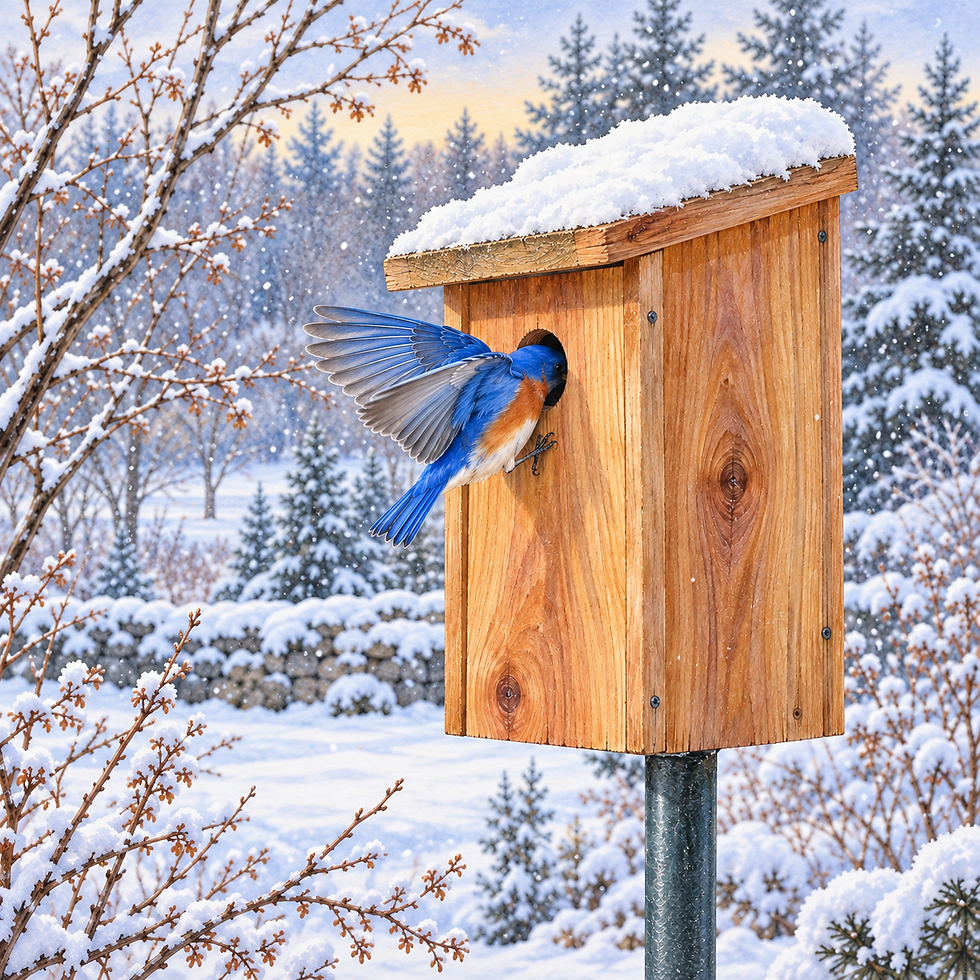
As autumn progresses, insects become less active and some natural food supplies begin to decline. This is particularly important for insect-eating birds such as the Eastern Bluebird. During warmer months, bluebirds feed primarily on insects, but as temperatures fall, they increasingly rely on berries and other available foods. Offering mealworms can be an excellent way to supplement their diet. Live mealworms are especially appealing, although some bluebirds will also accept dried mealworms.

Not every bird heads south when winter approaches. Chickadees, cardinals, nuthatches, woodpeckers, and other familiar backyard birds remain in Massachusetts throughout the colder months. Maintaining body temperature during freezing weather requires considerable energy, making nutritious food especially valuable. Black oil sunflower seeds attract many seed-eating birds, while suet provides energy for woodpeckers and nuthatches. Unsalted peanuts are another nutritious option for several backyard species.
Fall is also an excellent time to begin attracting Eastern Bluebirds. Although some migrate south, others remain in Massachusetts year-round when suitable habitat and food are available. During colder months, bluebirds may gather in small flocks while searching for food. Unlike many common backyard birds, bluebirds generally aren't attracted to traditional seed feeders. Introducing mealworms in the fall gives them an opportunity to discover a supplemental food source before winter arrives. Patience is important, as it may take time for bluebirds to become regular visitors.
Fresh water is another essential part of a healthy backyard habitat. Birds need water for drinking and maintaining their feathers throughout the year. As temperatures fall, natural water sources may freeze, making a clean birdbath especially helpful. A birdbath heater designed for outdoor use can keep water accessible during freezing weather. Even birds that rarely visit feeders may stop by for a drink.

Keeping feeding stations clean is equally important. Dirty feeders can contribute to the spread of disease, particularly when large numbers of birds gather in one location. Regular cleaning, removing spoiled food, and keeping the ground beneath feeders free of accumulated waste all help maintain a healthier environment. If sick birds appear, temporarily removing feeders and following local wildlife guidance is recommended.
Creating a bird-friendly backyard involves more than simply providing food. Native plants, berry-producing shrubs, fresh water, and safe shelter all contribute to a healthy habitat. Leaving seed-bearing flowers standing through winter and allowing some fallen leaves to remain can provide natural food and shelter for insects that birds depend upon. Fall is also a good time to inspect bluebird nesting boxes, clean them after the nesting season, and check that they are securely mounted and protected from climbing predators.
By providing nutritious food, fresh water, and a safe environment, we can help backyard birds prepare for the challenges of winter. Imagine looking out your window on a crisp November morning and seeing a brilliant blue Eastern Bluebird visiting your feeder. It's one of the simple pleasures of creating a backyard habitat.
A little preparation in the fall can make your backyard a welcoming place for birds throughout the winter, while providing countless opportunities to enjoy the beauty of nature right outside your window.


Comments